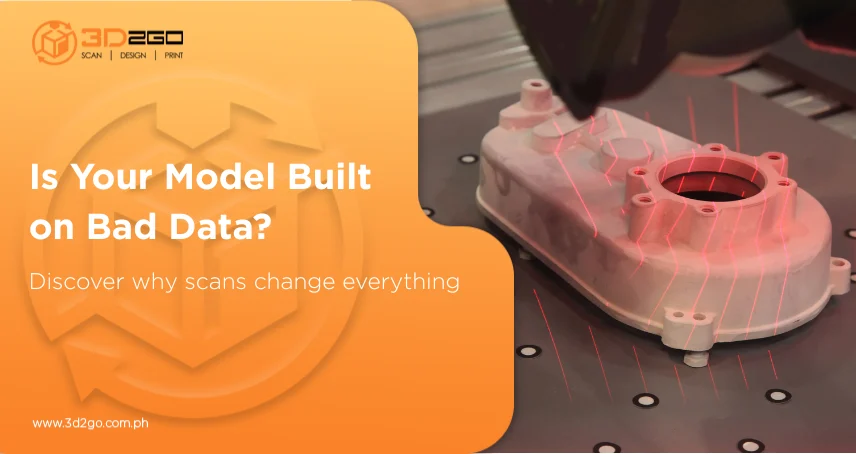
If you’ve ever tried turning a real-world object into a usable digital file, you already know it’s rarely as simple as it sounds.
Manual measurements take time. Estimates creep in. And somewhere along the way, the final model ends up slightly off. Not always obvious at first, but enough to cause issues later.
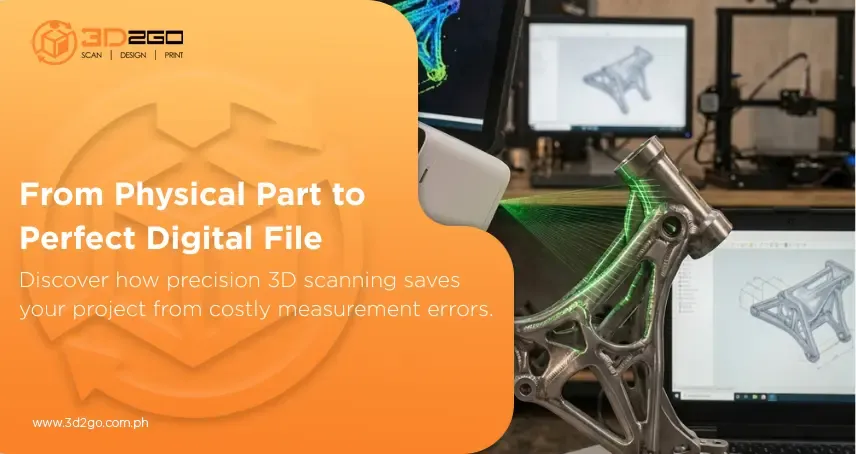
That’s why more teams are leaning into 3D scan conversion as a starting point. Instead of rebuilding objects from scratch, they’re working from captured data. With solutions like this, the process becomes less about guessing and more about translating what’s already there.
Once that data is refined into a laser scan to 3d model, everything downstream tends to run smoother.
1. You Start With What’s Actually There
There’s a noticeable difference between modeling from scratch and working from real data.
When you convert a laser scan to 3d model, you’re not approximating shapes; you’re building from exact geometry. Every curve, edge, and proportion reflects the original object.
That alone removes much of the uncertainty early on.
2. The Jump From Physical to Digital Gets Shorter
Traditional workflows can feel a bit stretched out: measure, sketch, refine, adjust, repeat.
With a laser scan to 3d model, much of that heavy lifting is already done upfront. The scan captures the object, and the process shifts toward refining rather than recreating.
It doesn’t just save time; it simplifies the entire workflow.
3. Less Room for Human Error
Even the most careful manual process has its limits.
Measurements can vary. Details can be missed. And small inconsistencies tend to build on each other.
A laser scan to 3d model reduces that risk significantly. Since the data comes directly from the object, there’s less reliance on interpretation.
It’s a more stable starting point, plain and simple.
4. Design Decisions Become Clearer
When the base model is accurate, decisions become easier.
Teams working with a laser scan to 3d model aren’t second-guessing proportions or alignment. They’re working with something that already reflects reality, which makes it easier to evaluate ideas and move forward with confidence.
That clarity cuts down on hesitation and speeds things up.
5. Fewer Fixes Later On
Revisions usually trace back to one thing: the starting point wasn’t quite right.
When you begin with a solid laser scan to 3d model, a lot of those downstream fixes disappear. The structure is already aligned with the real object, so there’s less need to correct it later.
It’s one of those benefits you don’t fully appreciate until you’ve dealt with too many revision cycles.
6. Visuals Feel More Grounded
There’s something different about visuals built from real data.
A laser scan to 3d model tends to look more natural because it’s rooted in actual geometry. That makes a difference in presentations, especially when stakeholders need to quickly understand scale, form, or spatial relationships.
It’s not just about looking good, it’s about making sense right away.
7. Engineering Work Becomes More Efficient
Precision matters in engineering. There’s not much room for interpretation.
Working from a laser scan to 3d model gives engineers a reliable reference to build on. It reduces the need for repeated measurements and allows for more accurate analysis from the start.
That consistency helps keep projects moving without unnecessary slowdowns.
8. Customization Gets Easier
Making changes is a lot simpler when the base is accurate.
With a laser scan to 3d model, adjustments can be made without worrying about whether the original structure is correct. Whether it’s modifying a component or testing a variation, the process feels more controlled.
You’re not fixing the base, you’re building on it.
9. Teams Stay Aligned
Miscommunication often comes from unclear references.
When everyone works from the same laser scan to 3d model, there’s less room for confusion. Designers, engineers, and stakeholders are all looking at the same data.
That shared understanding keeps conversations focused and decisions more straightforward.
10. You’re Building Something You Can Reuse
A well-prepared laser scan to 3d model isn’t just a one-time asset.
It can be reused, adapted, or expanded for future projects. Over time, that builds a library of reliable digital references that can speed up future work.
According to Statista, the adoption of 3D technologies continues to grow as industries shift toward digital workflows and asset-driven processes. That makes reusable, high-quality models even more valuable moving forward.
Why More Teams Are Making the Shift
At a certain point, the limitations of manual workflows become hard to ignore.
They take longer. They introduce variability. And they often require more correction than expected.
Switching to a laser scan to 3d model approach isn’t just about efficiency, it’s about starting from a place you can trust. That changes how everything else unfolds, from design to final output.
Turning Real-World Objects Into Usable Digital Assets
What this process really does is bridge the gap between physical and digital.
A laser scan to 3d model takes something tangible and turns it into something you can analyze, modify, and reuse. It creates a foundation that supports better decisions and smoother workflows.
And in most cases, that foundation ends up saving more time than it takes to build.
Build From Data, Not Guesswork
Strong results usually come from strong starting points.
A well-executed laser scan to 3d model gives teams that advantage, accurate, structured, and ready for real-world use.
3D2GoPH focuses on delivering scan-to-model workflows that prioritize precision without overcomplicating the process.
If you’re looking to turn real-world objects into reliable digital assets, you can connect here:
3D2GoPH.